Tarte à La Bouillie
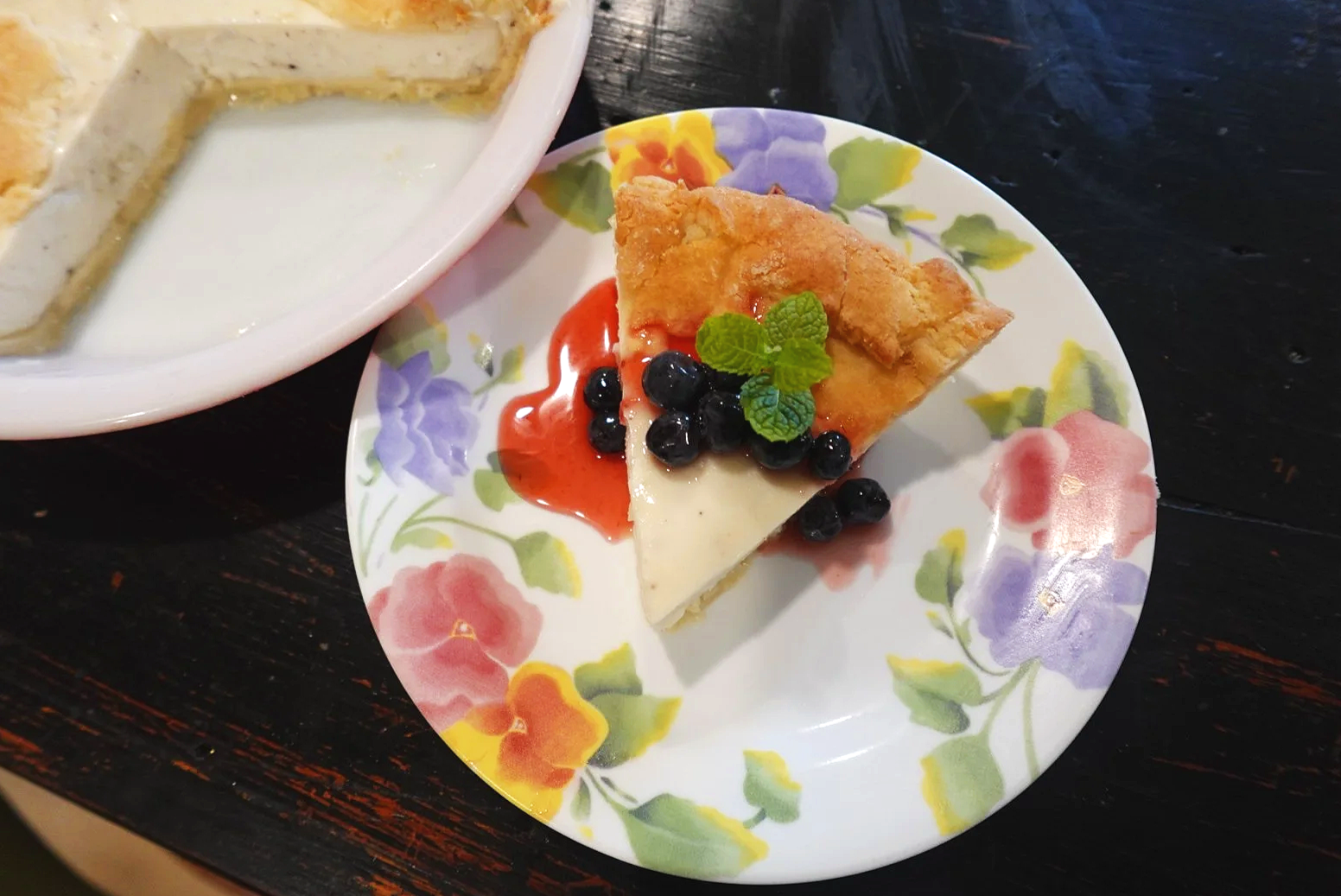
A classic Cajun vanilla custard pie with a tender, sweet crust and old-fashioned comfort in every slice.
Want to know more about the history behind Tarte à la Bouillie? I’ve included a detailed description below the recipe.

Tarte à la Bouillie
Tarte à la Bouillie is a classic Cajun custard pie made with a creamy vanilla filling baked into a tender, lightly sweet crust. Simple, old-fashioned, and comforting, it’s the kind of dessert that tastes like somebody’s grandmother was expecting company.
Ingredients
Instructions
Notes
The pie crust recipe makes two 9 inch pie crusts or one 10 inch deep dish pie crust
Nutrition Facts
Calories
717Fat
31 gSat. Fat
19 gCarbs
102 gFiber
1 gNet carbs
100 gSugar
55 gProtein
10 gSodium
377 mgCholesterol
114 mgTarte à la Bouillie is one of those Cajun desserts that looks simple on the plate but carries a whole lot of South Louisiana history. More than a recipe, it reflects the language, thrift, and family traditions that shaped Cajun cooking.
The name comes from French. Tarte means “tart” or “pie,” and bouillie comes from bouillir, “to boil.” In standard French, bouillie means a thick cooked food made from flour with milk or water, something like porridge, gruel, or a cooked milk pudding. The Académie Française defines bouillie as flour diluted in milk or water, then cooked until thick and paste-like. So, despite the common Louisiana explanation that it means “burnt milk tart,” the older French meaning is closer to “a tart filled with cooked milk custard or porridge.” Some modern Southern food sources repeat the “burnt milk tart” translation, showing how the folk explanation has become part of the dish’s Louisiana storytelling.
Historically, Tarte à la Bouillie belongs to the Cajun home-cooking tradition that grew out of Acadian French cooking after the Acadians settled in Louisiana. The Acadians were French-speaking people exiled from what is now Atlantic Canada in the 18th century; many eventually came to Louisiana, where their language, food, music, architecture, and customs adapted into what we now call Cajun culture. (National Park Service) Their cooking was shaped by practicality: what could be raised, grown, stretched, preserved, or made from pantry staples. A dessert made from milk, eggs, flour, sugar, butter, and vanilla fits perfectly into that world. That practical tradition helps explain the dessert’s simple ingredients.
At its heart, Tarte à la Bouillie is a sweet-dough custard pie. Unlike a flaky American pie crust, many traditional versions use a tender, cookie-like sweet dough. The filling is a stovetop custard, often made with milk, eggs, sugar, flour or cornstarch, and vanilla, then poured into the crust and baked. Real Cajun Recipes describes it as a classic Cajun custard pie made with milk, eggs, and vanilla, showing French tart-making techniques adapted by Acadian cooks. These techniques reflect the practical cooking described above.
The dessert also reflects the old Cajun habit of making something special out of very little. Bouillie by itself was a comfort food and sometimes a survival food: a cooked milk-and-flour pudding that could be sweetened with whatever a family had. One Louisiana writer remembers bouillie au lait as affordable Depression-era food in Ville Platte because it needed only milk, flour, and something sweet, such as molasses, honey, or sugar. ((Parenthetically) Speaking) Turning that humble bouillie into a tart made it company-worthy without requiring expensive ingredients. In that way, the filling grows out of the same thrift described earlier.
It was especially tied to grandmothers, holidays, church gatherings, and family tables. Taste of the South calls it a classic Cajun dessert and notes that, though less famous outside Louisiana than pralines or beignets, it remains a staple on many Louisiana grandmothers’ tables. Marcelle Bienvenu, writing for Rouses, remembers first encountering sweet dough pies known locally as tarte-à-la-bouillie in the 1960s during Easter weekend in Catahoula, a village in St. Martin Parish near the Atchafalaya Basin. That kind of memory is exactly how the dessert has survived: not through fancy restaurants first, but through families passing it down at gatherings. Those gatherings keep the tradition alive.
There are also local variations. Some versions are made as one large pie, while others are made as small hand pies or individual tarts. Some have a lattice crust; some are plain. Some families use flour in the custard, others cornstarch. Some make the crust thick and cookie-like; others use something closer to pie dough. The spelling changes too: you’ll see Tarte à la Bouillie, Tarte à la Bouille, Tarte au la Bouillie, and other Cajun-French spellings. That variation is normal in Louisiana foodways, where many recipes were passed down orally before they were standardized in writing. Together, these differences show how the dish adapted from one kitchen to another.
One beautiful piece of oral tradition comes from Alzina Toups, the late legendary Cajun cook from Galliano. Louisiana Cookin’ describes her Tarte au la Bouillie as a traditional Cajun custard pie and notes that she saved the sweet dough scraps to make little cookies, which “old timers” called Pillowcase Cookies. That detail says a lot about the culture around the recipe: nothing is wasted, everything is stretched, and even the scraps are turned into something children or working people can enjoy later. It also echoes the thrift found throughout the desert’s history.
Tarte à la Bouillie also belongs to the same family as other old-fashioned custard desserts in French and Southern cooking, but the Cajun version has its own identity because of the sweet dough crust, the cooked bouillie filling, and its attachment to South Louisiana home kitchens. It is not showy. It is not heavily spiced or decorated. Its importance stems from its familiarity, economy, and deep ties to memory. Those qualities bring the history into focus.
So the history of Tarte à la Bouillie is not just the story of a single dessert. It is the story of the French language, Acadian adaptation, Cajun thrift, Catholic holiday tables, grandmother cooking, and the South Louisiana gift for turning pantry ingredients into something that feels like an inheritance.